
If you’re starting to notice more eye strain when reading, trouble seeing at dusk or subtle changes in distance vision, you’re not alone. Age-related vision changes are common — and many people are turning to supplements to support eye health in a natural, low-risk way. In this review I’ll take a close look at Vision 20, a doctor-formulated supplement from Zenith Labs that combines 10 natural ingredients (including lutein, zeaxanthin and zinc) intended to support near- and far-distance vision, protect low-light sight and fortify eyes against oxidative damage.
This is a hands-on, user review aimed at people researching vision supplements. I’ll walk through what’s inside Vision 20, how it’s designed to work, who it’s best for, safety and quality signals and whether it’s worth trying.
Table of Contents
Quick verdict — What Vision 20 promises
Vision 20 positions itself as an all-in-one daily capsule that:
- Supports near- and far-distance vision
- Protects low-light (night) vision
- Helps defend against age-related vision decline
- Combines carotenoids with zinc to improve absorption
If you want a single, doctor-formulated capsule that bundles the most commonly researched vision nutrients (lutein, zeaxanthin, beta-carotene, vitamin A) plus supporting antioxidants and minerals, Vision 20 is built with that exact goal in mind.
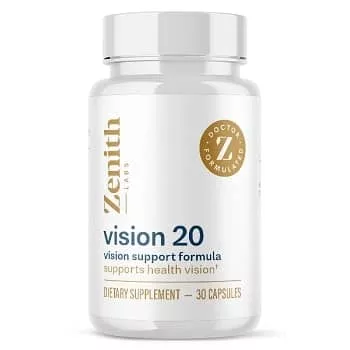
What’s inside Vision 20? (Ingredients explained)
Here are the headline ingredients and why they matter:
Lutein & Zeaxanthin
These two carotenoids are the central stars of many eye-health formulations. They naturally accumulate in the retina and are associated with reduced oxidative stress in eye tissues — essentially, they can help shield delicate cells from light-related damage.
Zinc
Zinc is a mineral that plays a role in eye metabolism and has been shown to support vitamin A activity. Vision 20 markets zinc as a “carotenoid activator,” intended to improve the way other nutrients are used by the body.
Beta-carotene & Vitamin A (Retinyl Palmitate)
Vitamin A derivatives help maintain healthy photoreceptor function and low-light vision. Beta-carotene is a provitamin A compound found in many colorful vegetables.
Lycopene
A tomato-derived antioxidant, lycopene is included for its potential to reduce oxidative stress and support overall ocular health.
Taurine
An amino acid found naturally in animal-based foods, taurine is associated with retinal health and may help protect against certain stressors like UV exposure.
Rose Hips, Grape Seed Extract, Bilberry Extract
These plant extracts are rich in antioxidants and polyphenols; they are commonly used to help support vascular health and reduce oxidative damage in tissues — including eye structures.
Together, these 10 ingredients create a broad-spectrum approach: carotenoids and vitamin A to support photoreceptors, zinc to assist absorption and antioxidants to help reduce oxidative insult.
How Vision 20 is supposed to work (simple explanation)
Vision 20 takes a two-pronged strategy:
- Provide pigment and protective nutrients — Lutein and zeaxanthin accumulate in the macula and help filter harmful high-energy light and oxidative molecules.
- Support absorption and tissue protection — Zinc and antioxidant extracts help the body make use of carotenoids and defend cells from damage that contributes to age-related decline.
The formula is meant to be taken once daily. The idea is consistency: sustained intake of these nutrients helps maintain the eye’s natural defenses and supports visual performance over time.
Realistic expectations — what you can (and shouldn’t) expect
It’s important to be practical. Supplements like Vision 20 are designed to support eye health — they are not a cure or an overnight fix for vision loss.
What many users report (and what the product claims) are improvements in:
- Reduced eye strain when reading small print
- Slightly easier low-light navigation
- Feeling more comfortable during screen work
Some people may notice benefits in a few weeks. Others may need months of consistent use. Results vary depending on baseline nutrition, underlying eye conditions and lifestyle (diet, sleep, screen time).
Important: If you’re experiencing sudden vision changes, flashes or a rapid decline in eyesight, see an eye doctor immediately — supplements are not a replacement for medical evaluation.
Who should consider Vision 20?
Vision 20 is a reasonable option if you:
- Want a single, daily capsule that combines multiple eye-support nutrients
- Prefer natural, antioxidant-rich ingredients
- Are looking for a preventative or supportive approach to mild vision strain or early age-related changes
- Want a doctor-formulated product from a supplement company that markets quality controls
People with specific eye diseases (macular degeneration, retinal detachment, etc.) should consult their ophthalmologist before starting any new supplement. Also, if you take medication, have a zinc allergy or are pregnant/nursing, check with a healthcare provider first.
Quality & safety — what to look for
Vision 20’s product copy claims the manufacturing facility is “regularly audited by the FDA” and that ingredients are tested for purity. Those are positive quality signals if accurate; when shopping, look for:
- Third-party testing labels (USP, NSF) on the product page
- Clear ingredient dosages on the Supplement Facts panel
- Transparent return and guarantee policies
Also note: Vision 20 markets itself as gluten-free and certified non-GMO, which appeals to many buyers.
How to take Vision 20
The recommended dosage is one capsule per day. The product states you can take it with or without food and at any time of day. For best results, consistency matters — take it daily and pair it with a balanced diet rich in colorful fruits and vegetables, sunglasses for UV protection and regular eye checkups.
Vision 20 — why a supplement might help
You can get many of these nutrients from food: leafy greens for lutein/zeaxanthin, carrots for beta-carotene, tomatoes for lycopene and seafood/meat for taurine. But the product argues — reasonably — that matching therapeutic amounts through diet alone would require large, daily servings of specific vegetables and fruits.
For people who don’t eat consistently nutrient-dense meals or who prefer the convenience of a single capsule, a supplement like Vision 20 offers a compact way to boost intake.
Pros & cons
Pros:
- Comprehensive 10-ingredient formula built around lutein and zeaxanthin
- Includes zinc to support absorption
- Doctor-formulated by Zenith Labs
- Gluten-free, non-GMO claims
- Once-daily convenience
Cons:
- Supplements are not a substitute for medical treatment
- Individual results vary — not everyone will notice changes
- Dosage transparency and third-party testing should be confirmed before purchase
Final thoughts — is Vision 20 worth trying?
If you’re researching vision supplements with an eye toward prevention and daily support, Vision 20 is a thoughtfully composed option. It includes the core carotenoids most associated with eye health (lutein and zeaxanthin), pairs them with zinc for better absorption and adds antioxidant support from plant extracts and taurine. For many people looking to take proactive steps for their vision — especially those experiencing mild strain or early low-light difficulties — it’s a product worth considering.
Remember: keep expectations realistic. Supplements support and protect, they don’t reverse advanced disease. Always consult a healthcare provider if you have diagnosed eye conditions, take other medications, or are pregnant or breastfeeding.
Want to try Vision 20?
If the ingredients and approach line up with your goals, Vision 20 can be a convenient way to add high-quality carotenoids, zinc and antioxidants to your daily routine. Look for clear Supplement Facts, quality seals and a good return policy when purchasing. And of course, combine supplementation with a nutrient-rich diet, regular eye exams and protective habits like wearing sunglasses and managing screen time.