
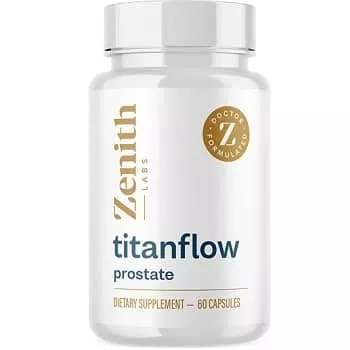
If you’re a man who wakes up several times a night, finishes a bathroom trip only to feel like you still have to go or simply wants reliable urinary flow without constantly worrying about prostate size — you’ve probably seen a dozen supplements promising relief. TitanFlow positions itself differently: instead of only targeting the prostate, it claims to strengthen the urethra walls so the tube that carries urine stays open and resists being “pinched shut.” I tried to dig into what’s behind that claim, what’s in the bottle and whether the science supports giving TitanFlow a serious look.
Below is a friendly, in-depth, no-fluff review written like a fellow user would write — informative.
Table of Contents
Quick summary — does TitanFlow deserve your attention?
TitanFlow is a daily capsule supplement that combines pumpkin seed oil, beta-sitosterol, lycopene, broccoli sprout (sulforaphane) extract and pygeum — ingredients commonly used for men’s urinary and prostate health. The product’s main selling point is that it’s designed to strengthen urethra walls, not just shrink the prostate. If that sounds like a fresh angle, it is — and several of the ingredients in TitanFlow have clinical and preclinical research linking them to improved urinary symptoms and supportive urinary health.
What TitanFlow claims to do (in plain language)
TitanFlow’s marketing says:
- The problem isn’t always prostate size — urethra wall strength matters.
- Strengthening the urethra helps reduce urgency, frequency and incomplete emptying.
- TitanFlow uses research-backed ingredients to fortify epithelial cells and support normal flow.
Those are clear and attractive claims. Important caveat: the proposition that “50% of men over 40 have weakened urethras” appears to be a marketing summary rather than a peer-reviewed consensus statistic.
What’s inside TitanFlow: ingredient by ingredient
Pumpkin Seed Oil — the anchor ingredient
Pumpkin seed oil has a history in traditional support for urinary symptoms and has been tested in clinical studies for overactive bladder and urinary dysfunction. Some trials report decreased urgency and improved emptying after weeks of supplementation. These results help explain why pumpkin seed oil is a mainstay in urinary-support formulas.
Beta-sitosterol — plant sterol with supportive data
Beta-sitosterol is a phytosterol that appears in many prostate/urinary health supplements. Multiple clinical reviews indicate it can improve urinary symptoms and objective flow measures (peak flow, residual volume) in men with benign prostatic hyperplasia (BPH) or lower urinary tract symptoms (LUTS), although it doesn’t necessarily shrink prostate size. Its inclusion in TitanFlow supports symptomatic improvement.
Lycopene — antioxidant protection
Lycopene, the red pigment found in tomatoes, has antioxidant properties and several studies link higher lycopene intake to better prostate health markers. While lycopene alone is not a cure, it’s commonly paired with other nutrients to support the cellular environment of the lower urinary tract.
Broccoli sprout (sulforaphane) extract — cellular defense
Broccoli sprouts are rich in sulforaphane, a compound that activates detox pathways and supports cellular defenses. Research suggests sulforaphane may protect bladder and urinary tract cells from damage and might be beneficial for overall urinary tract health when used as part of a broader nutritional approach.
Pygeum — traditional herbal support for flow
Pygeum (Prunus africana) has been used for decades and appears in several clinical reviews showing benefits for urinary symptoms, including reductions in nocturia and improvements in peak urine flow and residual urine volume. It’s widely regarded as an evidence-backed herbal option for urinary support.
How TitanFlow’s approach differs from typical prostate supplements
Most supplements focus only on reducing prostate inflammation or promoting a healthy prostate size. TitanFlow markets itself as “urethra-first” — prioritizing the structural and cellular environment of the urethra so the tube can stay open even if the prostate is a bit larger. That’s a shift in framing and it makes sense in theory: if multiple ingredients can support muscle tone, epithelial cell health and reduce residual urine, the practical outcome may be fewer urgent trips and more complete emptying.
Again: clinical trials that test a combined TitanFlow formula specifically are what ultimately matter. The ingredients, however, each carry a track record of benefit in urinary symptom studies.
What to realistically expect and timeline
Based on the way the included ingredients behave in clinical studies, most men who try similar formulas might notice incremental improvements over weeks to months — not overnight miracles. TitanFlow’s own guidance (two capsules daily, results commonly in 1–3 months) aligns with how long it takes for nutrient and herbal interventions to affect tissue function and symptom scores in published studies. If you’re looking for dramatic or immediate reversal of severe obstruction, medical evaluation is essential — supplements are best for mild-to-moderate symptom support or as part of a broader care plan.
Safety, manufacturing and what to check
TitanFlow is marketed as being manufactured in an FDA-inspected facility and free of major allergens. While that’s reassuring, remember:
- Supplements are not regulated the same way as prescription medicines. Look for third-party testing or certificates of analysis if possible.
- Talk with your physician, especially if you take blood thinners, have hormone-sensitive conditions or are on medications for prostate or bladder conditions.
- Watch for manufacturer transparency on dosages — an ingredient list is only meaningful when paired with amounts per serving.
Those routine safety checks are recommended for any supplement purchase.
Pros and cons
Pros:
- Uses multiple ingredients with clinical studies showing symptom improvement.
- Fresh angle: targets urethra support rather than only prostate shrinkage.
- Simple dosing: two capsules once daily.
Cons:
- The exact clinical evidence for the combined TitanFlow formula is not the same as ingredient-level studies — combined efficacy should be proven in trials.
- Marketing references to a single institution’s research may oversimplify complex urology science — check claims carefully.
- Supplements vary in quality between brands; verify sourcing and independent testing when possible.
Who should consider TitanFlow?
- Men experiencing mild-to-moderate urinary frequency, urgency or incomplete emptying who prefer a non-prescription support option.
- Those who have tried prostate-focused supplements with limited benefit and want to try a different approach.
- Men willing to take a daily supplement and wait 1–3 months to evaluate results.
If you have sudden severe urinary retention, blood in the urine, fever or other red-flag symptoms — seek immediate medical attention rather than relying on supplements.
Final verdict — is TitanFlow worth trying?
If you’re searching for a urinary support supplement that goes beyond the usual “shrink the prostate” pitch, TitanFlow’s ingredient mix and the rationale behind urethra support make it worth considering. The included nutrients — pumpkin seed oil, beta-sitosterol, lycopene, broccoli sprout extract and pygeum — each have research suggesting they can help urinary symptoms or protect urinary tract cells. The practical approach is reasonable: try the product as directed for at least 8–12 weeks while monitoring symptoms.
How to decide right now
- Review your current symptoms (frequency, urgency, nocturia, incomplete emptying).
- Check with your doctor if you have prostate disease, take prescription meds or have other chronic conditions.
- If cleared, try TitanFlow as directed for a two- to three-month period and track changes in a simple symptom diary.
- Reassess: if symptoms improve, great — if not, follow up with a urologist for diagnostic testing (flow tests, ultrasound) and alternative treatments.
Bottom line
TitanFlow isn’t a magic bullet, but it’s a focused, research-minded formula that targets urethral support — a plausible and evidence-backed strategy for many men with bothersome urinary symptoms. If you want a non-prescription option grounded in ingredients that show effects in clinical trials, TitanFlow is a product to consider. Always pair supplementation with medical guidance and realistic expectations.
[…] for everyone, but the combination is consistent with formulations that aim to reduce inflammation, support urinary flow and help maintain hormonal […]
[…] Flow Pro’s headline ingredients, Graminex flower pollen extract has been studied for urinary and prostate inflammation benefits. Preclinical and clinical reports indicate it may reduce prostate inflammation and support […]
[…] flow rate and quality of life. In other words, patients taking saw palmetto saw almost the same relief in urinary symptoms as those on medication. Saw palmetto is also anti-inflammatory, helping ease irritation in the […]