

Dealing with muscle and joint aches can make even ordinary daily activities feel more difficult. Whether discomfort comes from an occasional strain, a backache, a sprain or arthritis-related aches, many people are looking for a practical pain relief option that can be applied directly where it is needed.
That is where Roll On Relief stands out.
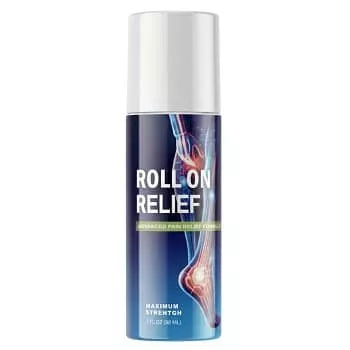
Roll On Relief is a 3 fl oz topical analgesic designed for the temporary relief of aches and pains associated with muscles and joints. Rather than swallowing tablets or spreading a cream with your fingers, this product uses a rolling-ball applicator that allows you to apply the formula directly to the affected area while keeping your hands clean.
What immediately makes Roll On Relief interesting is the transparency of its formula. The product states that it contains 160 mg of active ingredients per serving, with the individual quantities clearly disclosed on the product page. Instead of hiding the formula behind a proprietary blend, the product provides specific amounts for its active ingredients.
The result is a topical pain relief product that combines convenience, clearly disclosed ingredients and a targeted application method in one compact bottle.
In this Roll On Relief review, we will look closely at its active ingredients, application method, potential advantages, directions, safety information and why it may be worth considering for people searching for an easy-to-use topical analgesic.
Table of Contents
What Is Roll On Relief?
Roll On Relief is a maximum strength roll-on topical analgesic intended for external use.
Its primary purpose is to provide temporary relief from aches and pains involving muscles and joints. According to the product information, it can be used for discomfort associated with:
- Arthritis
- Backache
- Strains
- Sprains
- Muscle aches
- Joint aches
The product is packaged in a 3 fl oz bottle and uses a rolling-ball applicator rather than a traditional cream, ointment or spray.
This design makes Roll On Relief particularly appealing to people who prefer a targeted application. Instead of putting a topical product onto your hands and then rubbing it onto the affected area, you can roll the applicator directly over the area where relief is needed.
For anyone who regularly deals with back discomfort or hard-to-reach areas, that difference can be surprisingly useful.
Roll On Relief Ingredients: What Is Inside?
One of the strongest features of Roll On Relief is the transparency of its ingredient labeling.
The formula identifies its active ingredients individually and provides the amount of each one. The product does not rely on a vague proprietary blend for its active formula.
Active Ingredients
The three active ingredients are:
Camphor – 80 mg
Camphor is commonly used in topical preparations intended to provide a cooling or warming sensation and temporary relief from aches and pains.
Menthol – 50 mg
Menthol is another familiar ingredient in topical analgesics. Its cooling sensation can provide a noticeable topical experience and is commonly included in products designed for temporary relief of muscle and joint discomfort.
Peppermint Oil – 30 mg
Peppermint oil completes the active ingredient combination. Along with its characteristic cooling sensation, peppermint oil is commonly used in topical products formulated for massage and temporary comfort.
Together, these three active ingredients provide 160 mg of active ingredients per serving.
That number is worth highlighting because the product specifically emphasizes the fact that the amount is disclosed on the product page.
For consumers comparing topical pain relief products, knowing exactly what is in a product can make the purchasing decision easier.
Other Ingredients in Roll On Relief
In addition to the active ingredients, Roll On Relief contains several other ingredients:
- Aloe vera gel – 380 mg
- MCT oil – 10 mg
- Tea tree oil – 5 mg
- Sunflower lecithin – 1.5 mg
- DMSO – 1 mg
- Arnica – 0.1–0.5 mg
- Turmeric curcumin – 0.1–0.5 mg
- Ginger oil – 0.1–0.5 mg
The company states that there are nine ingredients with nine disclosed quantities, rather than grouping ingredients under a proprietary formula.
That level of labeling can be reassuring for shoppers who like to know what they are applying to their skin.
Why the 160 mg Active Formula Matters
One of the most prominent selling points of Roll On Relief is the stated 160 mg of active ingredients per serving.
The active formula consists of 80 mg of camphor, 50 mg of menthol and 30 mg of peppermint oil.
This straightforward presentation makes the product easier to understand at a glance.
When shopping for topical pain relief, labels often use terms such as “maximum strength,” “extra strength,” or similar descriptions. Roll On Relief takes a more numerical approach by specifying the amount of its active ingredients.
For consumers who prefer specific information rather than marketing terminology alone, this is an appealing feature.
The formula is also designed specifically as an external analgesic, meaning that the product is applied to the skin rather than taken internally.
A Roll-On Applicator Designed for Convenience
The rolling-ball applicator is arguably one of Roll On Relief‘s most practical features.
Traditional topical pain relief products often require the user to dispense a cream, gel or ointment onto their fingers before massaging it into the skin.
That is not always ideal.
Your hands can become greasy, oily or strongly scented and you may need to wash them immediately afterward.
Roll On Relief takes a different approach.
The rolling ball allows the user to apply the product directly to the affected area. This helps make the application more controlled and targeted while reducing direct contact between your hands and the formula.
For people who use topical products regularly, this simple change in application method can make the overall experience much more convenient.
Roll On Relief Can Help Reach Your Back
Back discomfort can be especially frustrating when you are trying to apply a topical product by yourself.
A small tube of cream may require awkward twisting, stretching or assistance from another person.
The product description specifically highlights its approximately four-inch bottle and rolling-ball applicator as a way to make it easier to reach areas such as the middle of your back.
That is a meaningful advantage.
A topical pain relief product only becomes useful when you can actually apply it to the place where you need it. A longer bottle combined with a rolling-ball applicator can make self-application more practical.
This is particularly appealing for people who want to handle their pain-relief routine independently.
How Roll On Relief Works for Temporary Pain Relief
Roll On Relief is intended to provide the temporary relief of aches and pains in muscles and joints.
The combination of camphor, menthol and peppermint oil gives the product its primary active formula and topical sensory experience.
Rather than swallowing an oral medication, users apply the formula directly to the affected area.
This makes Roll On Relief an attractive option for someone looking for a topical approach to pain relief.
The product also specifically states that it contains no NSAIDs.
For people who prefer a topical product rather than taking an oral NSAID, this feature may make Roll On Relief especially interesting to consider. However, individual medication choices should always be discussed with an appropriate healthcare professional when there are existing medical conditions, medications, pregnancy, breastfeeding or other concerns.
No Pills and Nothing to Swallow
Another appealing feature is the simplicity of topical application.
Roll On Relief is not swallowed. It is intended for external use only and is applied to the affected area.
For people who prefer not to take an oral product for occasional muscle or joint discomfort, this can be an important consideration.
Instead of taking something by mouth, the user applies the product directly to the area needing temporary relief.
That makes the product particularly convenient for people who prefer to keep a topical analgesic available at home, in a travel bag or as part of a daily self-care routine.
Roll On Relief for Backache
Backache is specifically listed among the product’s intended uses.
That is important because back discomfort can be difficult to address with topical products that are awkward to apply.
The Roll On Relief design attempts to solve that problem by providing an applicator that can be maneuvered over a larger area while keeping the hands away from the formula.
For someone searching specifically for a roll-on pain relief product for backache, this format deserves attention.
The ability to apply a topical analgesic independently can make a considerable difference in convenience.
Roll On Relief for Muscle and Joint Aches
Muscle and joint discomfort can come from many everyday situations, including physical activity, overuse, strains or other sources of temporary discomfort.
Roll On Relief is formulated specifically for the temporary relief of aches and pains of muscles and joints associated with arthritis, backache, strains or sprains.
The product therefore occupies a useful space between convenience and targeted application.
Instead of applying a large amount of cream across an area, the rolling-ball design allows the user to focus application on the area that is bothering them.
For anyone looking for a topical analgesic that is easy to carry and straightforward to use, this can be a strong advantage.
Roll On Relief for Arthritis-Related Aches
Arthritis-related aches are another use identified on the product label.
While arthritis can be a complex condition that may require professional medical management, some people also use topical products for temporary relief of associated discomfort.
Roll On Relief provides a topical option that can be applied directly to areas where temporary relief is desired.
The important word here is temporary. The product is intended to relieve aches and pains rather than treat or cure the underlying cause of arthritis.
That makes it best viewed as a convenient tool that can become part of a broader approach to managing everyday discomfort.
What Makes Roll On Relief Different?
Several features help distinguish Roll On Relief from many conventional topical analgesic products.
1. A Clearly Disclosed Active Formula
The product provides individual amounts for camphor, menthol and peppermint oil.
There is no need to guess how the 160 mg total active amount is divided.
2. A Hands-Free-Feeling Application Method
The rolling-ball applicator minimizes direct contact with your hands and makes targeted application easier.
3. Convenient Back Application
The bottle design is intended to make hard-to-reach areas more accessible.
4. No Proprietary Blend
The product description emphasizes that ingredient quantities are disclosed instead of being concealed behind a proprietary blend.
5. No NSAIDs
Roll On Relief is specifically presented as a topical analgesic without NSAIDs.
These features combine to create a product focused heavily on convenience, transparency and targeted topical use.
How to Use Roll On Relief
According to the product page, adults and children over 12 years old should apply the product to the affected area no more than four times daily.
Children 12 years or younger should consult a doctor.
Because the product is a topical analgesic, it is important to use it exactly as directed.
The best approach is to apply it only to the intended affected area and follow the instructions printed on the product packaging.
Roll On Relief Warnings and Safety Information
As with any topical analgesic, proper use is important.
Roll On Relief is for external use only. It should not come into contact with the eyes or mucous membranes.
It should not be applied to wounds or damaged skin.
The product instructions also state that it should not be used in combination with other ointments, creams or sprays.
Another important warning is to avoid using the product with a heating pad or heating device.
The label instructs users to wash their hands with cool water after application.
If the condition worsens or symptoms persist for more than seven days, the instructions advise stopping use and asking a doctor.
Pregnant or breastfeeding individuals should ask a healthcare professional before use.
The product should also be kept out of the reach of children. If swallowed, the label advises getting medical help or contacting Poison Control immediately.
Because the product is flammable, it should be kept away from excessive heat and open flames.
Finally, users should store the product in a cool, dry place with the lid tightly closed and should not use it if the full body safety seal is broken or missing.
Following these directions is an important part of using any topical analgesic responsibly.
Is Roll On Relief Worth Buying?
Based on the product information provided, Roll On Relief has several characteristics that make it an appealing choice for people searching for a convenient topical pain relief option.
First, the formula is straightforward.
The product clearly identifies its three active ingredients and provides their quantities. The total is 160 mg of active ingredients per serving.
Second, the delivery method is highly practical.
The rolling-ball applicator eliminates much of the mess associated with traditional creams and makes targeted application easier.
Third, the bottle is specifically designed to make reaching areas such as the back more manageable.
And finally, the product is designed for several common sources of temporary muscle and joint discomfort, including arthritis-related aches, backache, strains and sprains.
Taken together, these features make Roll On Relief more than just another topical product.
It is designed around the actual experience of applying pain relief.
Roll On Relief Pros and Cons
Pros
Clearly disclosed active ingredients: The amounts of camphor, menthol and peppermint oil are specifically listed.
160 mg total active ingredients: The product provides a clearly stated total amount of active ingredients per serving.
Convenient roll-on application: The rolling ball allows targeted application without spreading the product with your fingers.
Useful for difficult-to-reach areas: The bottle design is intended to make applying the product to your back easier.
No NSAIDs: The product is formulated without NSAIDs.
Nothing to swallow: It provides a topical alternative for people who prefer external application.
Multiple intended uses: The product is labeled for temporary relief of aches and pains associated with arthritis, backache, strains and sprains.
Made in the USA: The product is identified as being made in the United States.
Cons
External use only: The product cannot be used orally and must be applied to the skin according to the label.
Application restrictions: It should not be used on damaged skin or with heating devices.
Usage limit: The directions specify a maximum of four applications per day for adults and children over 12.
Age restrictions: Children 12 years old or younger should consult a doctor.
Medical guidance may be necessary: People who are pregnant, breastfeeding, experiencing persistent symptoms or taking other treatments may need professional guidance before use.
Final Verdict: Is Roll On Relief a Good Topical Pain Relief Option?
Finding a pain relief product that is both effective-feeling and convenient to use can be challenging.
Many topical products work against that goal by being messy, difficult to apply or awkward to use on areas such as the back.
Roll On Relief takes a more practical approach.
Its combination of camphor, menthol and peppermint oil provides a clearly disclosed 160 mg active ingredient formula, while the rolling-ball applicator makes application targeted and convenient.
The product is specifically labeled for the temporary relief of muscle and joint aches associated with arthritis, backache, strains and sprains. It is also designed without NSAIDs and does not require anything to be swallowed.
For consumers who want a topical analgesic that is easy to carry, easy to apply and transparent about what is inside the formula, Roll On Relief is an option worth considering.
The biggest attraction may ultimately be its simplicity.
Roll it on.
Apply it directly where needed.
Keep your hands cleaner than they would be with a traditional cream.
And make the process of applying topical pain relief easier, especially when you need to reach your own back.
For people who regularly experience everyday muscle and joint discomfort and want a convenient topical option readily available at home or on the go, Roll On Relief offers a compelling combination of targeted application, clearly disclosed active ingredients and practical design.
When used according to the product’s directions and safety warnings, it can be a useful addition to a personal approach to temporary pain relief.
For anyone searching for a maximum-strength roll-on topical analgesic, Roll On Relief deserves a closer look.