

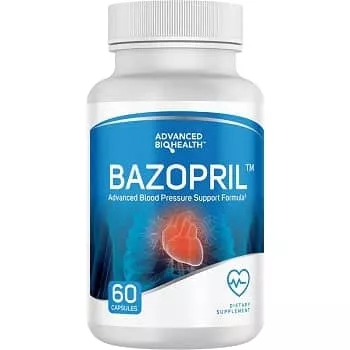
High blood pressure is a top concern for millions — and products that promise natural, science-backed support are everywhere. I tested the claims and dug into the research behind Bazopril, a botanical supplement positioned as a kidney-first formula to help maintain healthy blood pressure. Below I break down what Bazopril is, how it claims to work, the real science behind its star ingredients, who might consider it and why it could be an attractive pick for readers looking for natural cardiovascular support.
Table of Contents
Short takeaway: Bazopril packages well-known heart-and-kidney-friendly botanicals into one capsule. Several of its ingredients (olive leaf, green tea, hawthorn, garlic, juniper/mature “conifer” berries, mallow) have clinical or preclinical data suggesting modest benefits for blood-pressure and vascular health — but Bazopril’s claims should be viewed as supportive (not curative). Verify product manufacturing claims on the seller’s page and always pair supplements with medical guidance if you take prescription blood-pressure drugs.
What Bazopril says it does — the product story
Bazopril presents itself as a cardiovascular support supplement that focuses on optimizing kidney signaling — specifically the renin system — rather than just treating arteries or the heart. The marketing copy emphasizes that kidneys (and the renin hormone they produce) are central to blood-pressure control and positions Bazopril as a blend of “super-nutrients and herbs” chosen to support kidney function, healthy renin signaling, arterial flexibility and overall circulation.
The formula’s notable named ingredients include:
- Albaspine (presented as a “crown of Jesus” herb — likely referring to hawthorn-type botanicals),
- Conifer berry (juniper-type berries),
- Elaion tree leaf extract (appears to be an olive-leaf style extract),
- Mallow flower (Malva spp.),
- Lasuna bulb (traditional name for garlic/Allium sativum),
- Camellia sinensis (green/tea polyphenols).
The product also claims GMP manufacturing, third-party batch testing (HPLC, microbiology) and U.S. production — all good signals when true, but these are seller claims and should be verified on the product page or lab certificates. (I could not independently confirm those batch certificates here.)
Why the kidney angle matters
Recent research highlights that specialized kidney cells and their production of renin play an essential role in setting blood-pressure “set points” — a mechanism researchers have worked on for decades. University of Virginia researchers have described discoveries about kidney-based blood-pressure barometers and the triggers for renin production, underscoring that kidneys are central players in blood pressure regulation.
That means a supplement aimed at supporting renal signaling and vascular flexibility — rather than only vasodilation — is a plausible approach. Bazopril markets itself exactly on that idea.
Ingredient deep-dive — what the science says
Below I summarize the most important ingredients and the evidence that makes them compelling as part of a blood-pressure support formula.
Olive-leaf (Elaion tree leaf extract)
Olive leaf extract (rich in oleuropein and related polyphenols) has multiple randomized trials and meta-analyses suggesting it can reduce systolic and diastolic blood pressure in people with pre-hypertension or stage 1 hypertension — with some studies showing clinically meaningful drops at doses around 500–1000 mg/day. Olive leaf also appears to help lipid markers and has antioxidant/anti-inflammatory properties.
Why it matters for Bazopril: If Bazopril contains a standardized olive-leaf extract, that ingredient has one of the stronger clinical evidence bases for modest blood-pressure support.
Camellia sinensis (green/black tea polyphenols)
Tea polyphenols (especially green-tea catechins like EGCG) have been associated with modest reductions in systolic and diastolic pressure in meta-analyses. Regular intake of green tea or standardized extracts has shown pressure and lipid benefits in several short-term trials.
Why it matters: Tea polyphenols support vascular function (nitric oxide pathways, antioxidant effects) and pair well with olive-leaf for cardiovascular synergy.
Hawthorn / “Albaspine” (Crataegus spp.)
The term “albaspine” historically points to hawthorn-type shrubs. Hawthorn leaf/flower/berry extracts have a long herbal history for heart health and a growing body of clinical research showing modest improvements in blood-pressure and heart-function parameters in certain populations. Some standardized extracts (like WS 1442) have evidence for cardiovascular support. That said, hawthorn can interact with heart medications, so caution is warranted.
Juniper / Conifer berry (Juniperus spp.)
Juniper (often sold as juniper or “conifer berries” in some blends) has traditional uses and preclinical studies suggesting antioxidant, lipid-modulating and circulation-supporting properties. Human data is limited and safety concerns (e.g., kidney irritation with high doses) are documented — so it’s best used as part of a balanced formula rather than alone.
Garlic (Lasuna / Allium sativum)
Garlic has one of the more robust natural-product profiles for cardiovascular support — multiple trials and meta-analyses show garlic can lower systolic blood pressure modestly, improve arterial flexibility and support healthy lipids. Garlic is widely used in botanical blood pressure formulations.
Mallow flower (Malva spp.)
Mallow has antioxidant and anti-inflammatory properties and animal studies that suggest kidney-protective effects in models of toxin-induced renal injury. While human blood pressure specific research is limited, mallow’s kidney-support reputation and antioxidant profile fit Bazopril’s kidney-first marketing.
Putting that science together: does Bazopril make sense?
From an ingredients standpoint, Bazopril reads like a concentrated blend of botanicals that have some supportive evidence for vascular, renal or metabolic health. Olive leaf and green tea are two ingredients with the clearest clinical signals for modest blood pressure benefit; garlic and hawthorn add plausible cardiovascular effects; mallow and juniper contribute kidney-protective and antioxidant support in preclinical work.
Realistic expectation: Expect modest, supportive improvements in circulation, antioxidant status and arterial function over weeks to months rather than immediate, dramatic blood-pressure drops. Supplements like these often work best alongside lifestyle measures (sodium reduction, exercise, weight management) and under medical supervision if you’re already on prescription medications.
What I liked about Bazopril
- Kidney-focused story — the product’s messaging aligns with recent research recognizing the kidney’s central role in blood pressure control, which makes for a distinctive positioning compared with “blood-vessel only” supplements.
- Ingredient selection — the formula includes several ingredients grounded in evidence (olive leaf, green tea, garlic, hawthorn). Those are credible components for a cardiovascular support blend.
- Third-party testing claims — the official website states HPLC and microbiology testing and GMP production. That’s important for quality if the certificates are real (ask the seller for COAs).
Caveats & safety notes (read before you click buy)
- Not a drug substitute. Bazopril is a supplement marketed to support healthy blood pressure; it is not a prescription medication and should not replace doctor-prescribed treatment for hypertension.
- Drug interactions. Botanicals like hawthorn and olive leaf can interact with blood-pressure meds, blood thinners or other cardiac drugs. Discuss with a clinician if you’re on medications.
- Ingredient transparency. Verify standardization (e.g., oleuropein content for olive leaf) on the product label or COA — efficacy often relates to dose and extract quality.
- Pregnancy & kidney issues. People who are pregnant, breastfeeding or have significant kidney disease should avoid or consult a clinician before using such formulas. Some components can irritate kidneys or affect pregnancy.
Who should consider Bazopril?
- People with borderline or mildly elevated blood pressure who prefer a botanical, multi-ingredient approach.
- People looking for a supplement with clinical anchors (olive leaf, green tea) and a clear kidney-focused story.
- Readers who want a single formula combining several evidence-backed botanicals, provided they check dosing and speak with their provider.
Bottom line — is Bazopril worth recommending?
Yes, with conditions. Bazopril — a kidney-first angle that ties into real renal renin science — and contains several ingredients with clinical or historical support for cardiovascular benefits. That makes it a convincing offer to readers who prefer natural approaches.
FAQ
Does Bazopril lower blood pressure?
Bazopril is formulated to support healthy blood pressure using botanicals that have shown modest BP-lowering effects in studies; it is not a prescription antihypertensive. Always consult your clinician.
Are the ingredients science-backed?
Several are — especially olive leaf and green tea — which have randomized trials and meta-analyses showing modest benefits. Hawthorn, garlic and mallow have supportive research as well.
Is Bazopril safe with blood-pressure meds?
Interactions are possible. Do not combine without medical advice.
If you’re looking for a kidney-minded, plant-forward approach to support healthy blood pressure — and you want a single formula that brings together olive leaf, green tea polyphenols, garlic, hawthorn and supportive botanicals — Bazopril is worth exploring. Check the product page for standardized extract levels, third-party COAs and exact dosing — then decide if it fits your health profile.
[…] Plus is a thoughtfully composed herbal capsule that leans on calming and circulation-supporting plants used in traditional medicine. It’s not a pharmaceutical—so don’t expect a magic […]
[…] about benefits: Weight and belly-fat reduction, improved blood sugar regulation, cholesterol and blood pressure support, better mood, liver and cardiovascular […]