

If you’re scrolling through endless fitness programs wondering which one actually delivers, here’s a straight-up, user review of WeFit — the 5-week, AI-powered home fitness program promising fast results, better posture and less back pain. I signed up, followed the plan and I’m sharing exactly what worked (and what to expect). If you’re looking for a program designed for busy lives, minimal equipment and measurable change, read on — this might be the one.
Table of Contents
What is WeFit? Quick overview
WeFit is a home fitness program that combines modern exercise science, wall-based exercise techniques, and AI-personalized routines. It’s marketed as a 5-week accelerated program where each week focuses on a specific stage: Foundation, Intensity, Breakthrough, Acceleration and Transformation. The program requires very little — a wall and optionally a yoga mat — and offers 24/7 access to certified trainers and nutritionists via the app.
Why I chose WeFit (and why you might, too)
I wanted something practical: short sessions, clear progress and guidance that adapts to my level. WeFit’s selling points that convinced me:
- Short, focused sessions — recommended 15–20 minutes, 3–4 times per week.
- Minimal equipment — only a wall and bodyweight exercises.
- AI personalization — workouts and nutrition adapted to my progress.
- Posture and back pain focus — targeted exercises for real-life benefits.
- Expert support — trainers and nutritionists available around-the-clock.
This checks the boxes I care about: efficiency, accessibility and measurable results.
How the 5-week structure works (what you actually do)
WeFit organizes each week around a specific goal, which helps keep the program fresh and progressive:
- Foundation (Week 1) — Set goals, learn proper form. Everything is low-impact to build a safe base.
- Intensity (Week 2) — Increase workout intensity and begin nutritional tweaks.
- Breakthrough (Week 3) — Push boundaries; this is where you’ll notice the first visible changes.
- Acceleration (Week 4) — Fine-tuning and focusing on weak points for faster gains.
- Transformation (Week 5) — Consolidate progress and plan next steps.
During the program, the AI adjusts sets, reps and movement progressions based on your logged performance and feedback. For someone like me who dislikes cookie-cutter routines, that tailored approach felt motivating and efficient.
What I liked most — key benefits I actually felt
Rapid, visible results
Within the first three weeks I noticed:
- Clothes fitting differently (leaner around the waist).
- A stronger midsection and better alignment when standing.
- Less stiffness in the lower back after longer desk days.
The program’s structure — short daily sessions with increasing intensity — made it easy to stay consistent, which I think is the real reason for the quick changes.
Better posture & reduced back pain
A big selling point for me was the wall-based posture work. The exercises focused on scapular positioning, core stability and hip mobility. After week two, I woke up with less lower-back tightness; by week five my posture at my desk and while walking felt noticeably improved.
Practical for busy people
Each session was short and could be done at home without special gear. That eliminated excuses — no commuting, no crowded gyms and no complicated equipment setup.
Personalized and safe
The AI-driven progressions meant I wasn’t stuck doing the same routine forever. If I struggled with a movement, the program offered regressions and coached me through safer alternatives. Plus, the 24/7 access to trainers was reassuring when I needed quick form checks.
What I didn’t love (honest pros & cons)
No program is perfect, and there were a couple of things to be aware of:
- Pacing can feel fast — If you’re completely new to exercise, the ramp-up from Foundation to Intensity can feel demanding. The program does offer regressions, but you’ll need patience.
- Digital-only experience — If you prefer in-person corrections, a mobile app won’t replace hands-on coaching. That said, the on-demand trainers were responsive and helpful.
- Nutrition guidance vs. meal planning — WeFit gives tailored nutrition advice to support goals, but if you want a full meal-prep plan, you may need to supplement with your own recipes or a meal-planning tool.
Overall, these were minor trade-offs compared to the benefits I experienced.
Typical results you can expect (based on following the plan)
While individual results vary, here’s a realistic expectation if you follow WeFit’s recommendations (3–4 sessions/week, 15–20 minutes per session, consistent nutrition guidance):
- Weeks 1–2: Improved movement quality, better posture, slight weight/fat reduction.
- Weeks 3–4: Noticeable changes in body composition and strength, reduced back pain, more energy.
- Week 5: Consolidated results — clothing fit changes, increased confidence, clear next-step options.
The combination of strength, flexibility and posture work makes WeFit particularly effective for people who want sustainable, functional fitness — not just cosmetic changes.
Who should buy WeFit?
WeFit is an excellent fit for:
- Busy professionals with limited time for workouts.
- People wanting to train from home without expensive equipment.
- Anyone with posture issues or mild-to-moderate back discomfort.
- Beginners who prefer guided progressions and adaptive coaching.
- Intermediate users who want a short, effective block to boost momentum.
If you’re an advanced athlete expecting extreme hypertrophy or heavy lifting, WeFit may be less ideal as a long-term sole solution — but it makes a phenomenal complementary program for mobility, posture and conditioning.
The WeFit experience: app, support and community
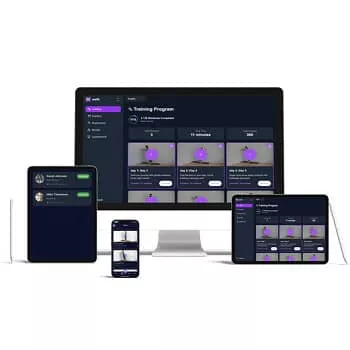
The app is the program’s hub: personalized workouts, progress tracking, instructional videos and nutrition guidance. The videos were clear, with emphasis on alignment and breathing — especially useful for wall-based moves which have specific setup cues. I also appreciated the quick access to trainers and nutritionists; whenever I had a question about form or recovery, someone typically responded with a practical fix.
Money-back & commitment considerations
Most programs like this offer a trial or guarantee — check the current offer when purchasing. If you’re unsure, treat this as a 5-week trial block: commit to the schedule, follow nutrition guidance and measure progress (photos, tape-measure, how clothes fit). If you commit, the odds of seeing meaningful change are high.
Final verdict — is WeFit worth it?
Absolutely — especially if you want fast, visible results without the fuss of a gym membership. WeFit’s biggest strengths are its simplicity, progressive structure and AI personalization. It’s a practical solution for realistic people who want real change: better posture, reduced back pain, weight loss and improved strength — all in short, doable sessions.
If you’re on the fence, consider what you’d lose by not trying: another month of inconsistent workouts, back pain that lingers or the slow progress of scattered routines. WeFit gave me structure, visible improvement and the confidence to continue training beyond the 5-week program.
How to get the most out of WeFit (quick tips for success)
- Commit to consistency: 3–4 sessions per week will give the best results.
- Track progress: Take weekly photos, measure your waist and note posture improvements.
- Follow nutrition guidance: Small, sustainable changes compound quickly.
- Use support: Ask trainers questions when unsure about form or regressions.
- Be patient with progression: The AI adjusts for you — give it honest feedback.
If you want a short, science-backed program that’s easy to start and built for real-life results, WeFit is a strong choice. It’s perfect for people who want to transform their body and posture without an expensive gym or complicated equipment. Ready to see what 5 focused weeks can do? Try WeFit and start your transformation today.
[…] Extended periods without food encourage the body to burn fat for fuel. Practitioners report measurable boosts in fat oxidation during fasting windows, which contributes directly to weight loss. […]