
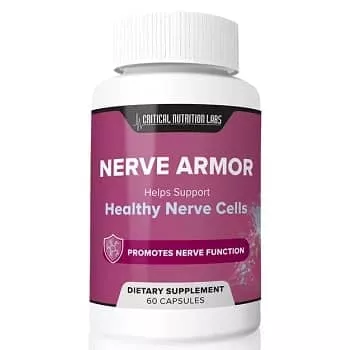
If you’re reading this, chances are you—or someone you love—are wrestling with burning, tingling or numbness that never seems to go away. Nerve pain is uniquely disruptive: it limits movement, saps energy and hangs over your day-to-day life. Enter Nerve Armor, a dietary supplement that claims to soothe nerve pain, protect the myelin sheath and promote nerve repair using a blend of PEA, gotu kola, corydalis, benfotiamine and a special granular form of alpha lipoic acid (ALA). In this review I’ll break down what’s inside the bottle, what the manufacturers claim and whether this product is worth trying.
Table of Contents
What is Nerve Armor? Quick overview
Nerve Armor is marketed as a nerve-health supplement designed to:
- Reduce nerve pain, burning and numbness
- Protect and help rebuild the myelin sheath (the insulating layer around nerves)
- Lower nerve inflammation and oxidative stress
- Support nerve energy and overall repair
Each bottle contains 60 vegetarian capsules. The manufacturer highlights clinical research and specific forms of ingredients (for example, Palmitoylethanolamide/PEA and granular ALA) and states the formula is produced in an FDA-registered, GMP-certified facility in the USA.
Why the myelin sheath matters (and why repair matters)
Think of your nerves like electrical wires. The myelin sheath is the insulating rubber coating that allows electrical signals to travel quickly and accurately. When that protective layer becomes damaged, signals misfire—causing the stabbing, burning or numb sensations many people call “nerve pain.”
Nerve Armor frames many of its ingredient benefits around protecting or rebuilding this myelin layer and calming the immune responses that can accelerate nerve damage. Whether you’re a clinician, an informed consumer or someone simply fed up with chronic neuropathy, anything that reduces inflammation around nerves while supporting repair can be meaningful.
Key ingredients — what they are and why they’re included
Below I summarize the primary actives in Nerve Armor and what the product claims each does. Where bold claims are made (e.g., percentage improvements), I describe them as manufacturer-cited to be clear.
Palmitoylethanolamide (PEA)
Palmitoylethanolamide (PEA) is a naturally occurring fatty acid amide that has been studied for its anti-inflammatory and neuroprotective effects. Nerve Armor highlights a study it cites from the Journal of Molecular Sciences and reports benefits such as faster nerve repair and notable pain reduction. The product positions Palmitoylethanolamide (PEA) as the central calming agent that helps reduce the immune “swarming” that could damage myelin.
Gotu Kola (Centella asiatica)
A traditional herb used for centuries, Gotu Kola contains triterpenoids which are thought to support tissue repair and collagen production. Nerve Armor claims that this herb can assist in rebuilding myelin and supporting overall nerve structure.
Corydalis
Corydalis is a plant used in some traditional medicine systems for pain relief. The product points to corydalis-derived compounds (like DHCB) as reducing inflammation and blocking pain signaling without the tolerance and dependency risks associated with opioids.
Benfotiamine (a bioavailable B1)
Benfotiamine is a fat-soluble derivative of thiamine (vitamin B1) that is more readily absorbed than regular B1. Nerve Armor emphasizes benfotiamine’s potential to support antioxidant systems (notably glutathione) and boost cellular energy—both important for nerve repair.
Granular Alpha Lipoic Acid (ALA)
Alpha Lipoic Acid (ALA) is a well-known antioxidant used for nerve support. The product claims a “granular” form of Alpha Lipoic Acid (ALA) that absorbs better and more effectively targets nerve symptoms like burning, tingling and numbness.
How the formula is positioned
Nerve Armor leans into several differentiators:
- Targeted ingredient selection — the formula combines Palmitoylethanolamide (PEA), herbals, benfotiamine and enhanced-absorption Alpha Lipoic Acid (ALA).
- Clinical-dose claims — manufacturer states dosages reflect those used in studies (they say ingredients are dosed according to research-backed amounts).
- Manufacturing & safety — veggie capsules, non-GMO, Prop 65 compliant, produced in a GMP-certified facility.
- Dual action — reduce inflammatory “termite cells” (as the marketing calls them) while supporting the body’s repair mechanisms.
In plain terms: it’s promoted as both a pain-relief and repair product rather than just a symptomatic painkiller.
Realistic expectations: what the product claims vs. what to watch for
The Nerve Armor marketing is very optimistic—saying users often notice relief within 3–7 days and claiming dramatic percentage improvements in nerve repair and pain. As with any supplement:
- Consider these as manufacturer-cited claims. Look for the original studies if you want to verify methods, sample sizes and clinical relevance.
- Supplements can help, but individual responses vary widely based on the root cause of neuropathy (diabetes, chemotherapy, autoimmune conditions, vitamin deficiencies, etc.).
- Always consult a healthcare provider before starting a new supplement—especially if you’re on medication or have a chronic health condition.
Who might benefit most from Nerve Armor?
Nerve Armor is likely targeted toward adults experiencing peripheral neuropathy symptoms—burning, tingling, numbness in the hands, feet or legs—who are looking for a natural, multi-ingredient approach. If your symptoms are minor or intermittent, the product claims it may still help; if you have severe or progressive neurological signs, see a clinician promptly.
Safety, dosing and practical use
The manufacturer recommends two capsules each morning with water and food and suggests that some users opt for a double dose (two capsules twice daily) for stronger results. Again, it’s wise to consult a clinician before increasing dose.
The product promotes safety features—veggie capsules, third-party manufacturing standards, Prop 65 compliance—but if you have allergies or take prescription medications, run the ingredients by your healthcare provider.
Pros and cons
Pros:
- Multi-target formula addressing inflammation, pain signaling and repair
- Uses bioavailable forms (benfotiamine, granular Alpha Lipoic Acid (ALA))
- Vegetarian, non-GMO, GMP-made in the USA
- Positioned to both soothe pain and support longer-term nerve health
Cons:
- Strong marketing language and impressive statistics should be independently verified
- Supplements are not a substitute for medical care in serious neuropathy
- Individual results vary—some users may not experience quick relief
- Manufacturer-sourced studies and claims require scrutiny for context
Final verdict: Is Nerve Armor worth trying?
If you’re actively searching for a focused nerve-health supplement to recommend or try—one that combines Palmitoylethanolamide (PEA), herbal support, enhanced antioxidants and a bioavailable B1 derivative—Nerve Armor presents a compelling, research-oriented formula. The way it pairs symptom relief (corydalis, Alpha Lipoic Acid (ALA)) with protective and reparative ingredients (Palmitoylethanolamide (PEA), gotu kola, benfotiamine) is attractive for anyone who wants more than short-term masking of pain.
That said, keep expectations measured: verify the research behind headline claims where possible, talk to your healthcare provider and consider starting with the manufacturer’s suggested dosing to assess tolerance and effect.
Where to buy
Nerve Armor is sold through its official product page (the manufacturer notes this as the lowest priced source). If you’re ready to try a supplement designed to address both nerve pain and nerve repair, consider checking the official page for current pricing, guarantees and any promotional offers. And remember: pairing a supplement with good sleep, glucose control (if diabetic) and exercise can improve outcomes for many people with neuropathy.
[…] energy and helps neutralize oxidative stress. ALA is often used in supplements marketed for nerve health because oxidative stress can contribute to nerve […]